Unlocking Playful Design with Young Barse
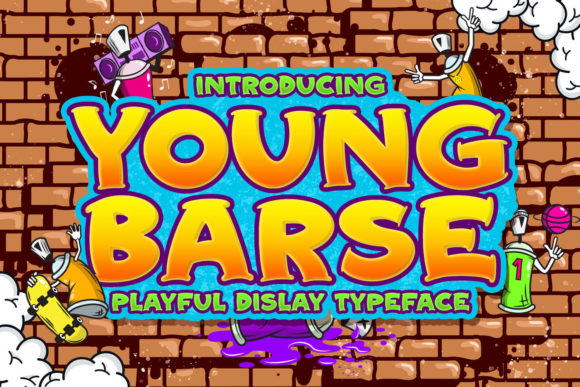
In the world of digital and print design, selecting the right typography is often the difference between a project that feels generic and one that resonates deeply with its audience. For creators, educators, and business owners targeting younger demographics or those seeking to inject a sense of whimsy into their brand, finding a typeface that balances readability with character can be challenging. This is where Young Barse emerges as a standout solution. Defined by its bold, playful, and fun aesthetic, this display font offers a versatile toolkit for anyone looking to add a lovely touch to their visual communications.
Whether you are designing assets for children's games, creating marketing materials for family-oriented events, or simply needing a creative accent in a cartoon-related design, Young Barse provides the structural integrity and stylistic flair required to succeed. Understanding how to leverage this specific typeface effectively requires looking beyond simple aesthetics and considering the practical needs of your projects.
Understanding the Core Identity of Young Barse
At its heart, Young Barse is not just a collection of letters; it is a mood setter. The font is engineered to convey energy, joy, and approachability. Unlike standard sans-serif fonts that prioritize neutrality, Young Barse embraces personality. Its bold strokes make it highly visible even at smaller sizes, while its playful curves invite interaction. This makes it an ideal choice for situations where attention must be captured immediately and held with a sense of fun.
The "lovely touch" mentioned in its description refers to the subtle nuances in the letterforms that prevent it from feeling childish or unprofessional. Instead, it strikes a balance that appeals to adults who appreciate creativity without sacrificing clarity. When used correctly, Young Barse transforms a standard layout into an engaging experience, guiding the viewer's eye through the content with a natural rhythm that feels both organized and spirited.
Addressing Common Design Challenges
Many designers and content creators face specific hurdles when trying to communicate with audiences that require a lighter tone. One common challenge is the difficulty of making educational content feel exciting rather than dry. Another is the struggle to create branding for products aimed at families that doesn't look like a cheap imitation of a cartoon logo. Furthermore, in the realm of game development, UI elements need to be distinct and expressive to enhance the user experience without cluttering the screen.
Traditional fonts often fail to solve these problems because they lack the necessary emotional weight. A rigid serif might feel too academic, while a thin script might lack the impact needed for headlines. Young Barse addresses these gaps by offering a middle ground. It provides the boldness required for high-impact headlines while maintaining the softness needed for friendly engagement. By integrating Young Barse into your workflow, you can bypass the trial-and-error process of mixing multiple fonts to achieve a cohesive, fun look.
Practical Applications Across Industries
The versatility of Young Barse allows it to be applied across various sectors, each with unique goals and requirements. Here is how different professionals can utilize this font to achieve specific outcomes:
- Children's Game Developers: In game interfaces, buttons and menus need to be intuitive yet inviting. Using Young Barse for menu headers and score displays can significantly increase player engagement. The font's bold nature ensures that text remains legible against complex, colorful backgrounds typical of gaming environments.
- Educational Content Creators: Teachers and curriculum designers often struggle to make worksheets or digital learning modules appealing to young students. Incorporating Young Barse for titles and key concepts can turn a boring assignment into an adventure. It helps break down barriers to learning by making the material feel accessible and non-threatening.
- Event Planners and Marketers: For birthday parties, family reunions, or community festivals, invitations and promotional banners need to pop. Young Barse serves as an excellent tool for creating custom graphics that stand out on social media feeds and physical flyers alike.
- Creative Illustrators and Cartoonists: Artists working on comic strips or storybooks often need text that complements their artwork. Young Barse pairs naturally with hand-drawn illustrations, reinforcing the narrative tone without competing for attention.
Strategic Implementation and Best Practices
To get the most out of Young Barse, it is essential to approach its implementation with strategy. While the font is designed to be playful, overuse can lead to visual fatigue. The goal is to use Young Barse as a highlighter for your message, not as the sole voice of the entire document.
Pairing for Balance
A common mistake is using Young Barse for body text. While it is readable, its decorative nature can become distracting when reading long paragraphs. The most effective approach is to pair Young Barse with a clean, neutral sans-serif font for the bulk of your text. This combination allows the headline to grab attention with its unique character, while the supporting text ensures easy comprehension. This contrast creates a professional hierarchy that guides the reader logically through the content.
Context Matters
Consider the context of your audience. If you are designing for a serious corporate event that includes a family day, Young Barse should be used sparingly to denote the "fun" sections, such as activity schedules or photo booth props. In this scenario, the font acts as a signal of relaxation and enjoyment within a structured environment.
Color and Composition
Because Young Barse is bold, it interacts strongly with color. To maximize its impact, avoid placing it on busy or high-contrast backgrounds where it might vibrate visually. Solid colors or gradients that complement the font's shape work best. Additionally, consider the spacing (kerning) carefully; playful fonts often benefit from slightly increased tracking to ensure the letters breathe and maintain their individual charm.
Tailoring the Approach for Different Users
Different users will approach the use of Young Barse based on their specific skill levels and project constraints. For beginners, the recommendation is to start small. Use the font for a single element, such as a blog post title or a button label, to test its impact. Observe how it changes the perceived tone of the page.
For experienced designers, Young Barse offers more advanced opportunities. You can experiment with layering effects, combining the font with textures or patterns to create depth. Since the font is bold, it holds up well under heavy graphic treatment. However, even experts must remain mindful of accessibility. Ensure that the color contrast between the Young Barse text and its background meets WCAG standards so that all users, including those with visual impairments, can enjoy the content.
Conclusion: Elevating Your Creative Projects
In summary, Young Barse is more than just a decorative typeface; it is a strategic asset for anyone looking to connect with an audience on a fun, energetic level. Whether you are building a children's app, designing a party invitation, or creating a cartoon-themed website, this font provides the "lovely touch" necessary to elevate your work above the mundane. By understanding its strengths and applying it with thoughtful consideration, you can solve common design challenges and deliver results that are both visually stunning and functionally effective.
When you choose Young Barse, you are choosing to embrace creativity and playfulness in your professional output. It is a bold decision that pays off in increased engagement and a stronger emotional connection with your viewers. Start exploring how this font can transform your next project today, and watch as your designs come alive with a new sense of joy and purpose.