Bringing Authenticity to Design with Choco Bubble
In the vast landscape of digital typography, finding a typeface that strikes the perfect balance between whimsy and professionalism can be a challenging endeavor. Most designers struggle to find fonts that are playful enough to engage an audience without sacrificing legibility or appearing unprofessional. This is where Choco Bubble emerges as a distinctive solution. It is not merely a collection of characters; it is a visual tool designed to inject energy and personality into any project. As a fun and quirky display font, it embodies playfulness and authenticity, making it the perfect choice for any children activity or school project.
The design industry often oscillates between rigid minimalism and chaotic experimentation. Choco Bubble sits comfortably in the middle ground, offering a structured yet organic feel. When you add this chunky lettered font to your designs, you will notice how it makes them come alive. The following sections explore the multifaceted nature of this typeface, examining its characteristics, practical applications across various sectors, and the strategic advantages it offers to creators seeking to connect with their audiences on a deeper level.
The Anatomy of Playfulness: Understanding the Font's Characteristics
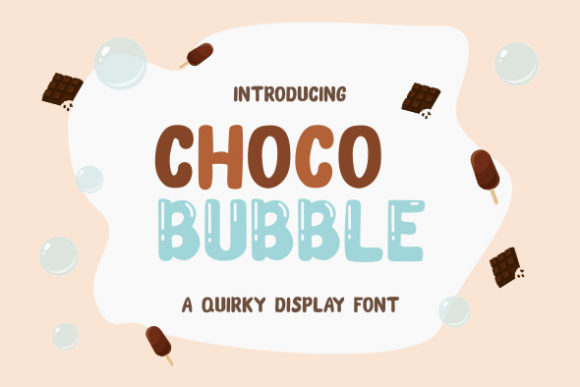
To appreciate the utility of Choco Bubble, one must first understand its visual architecture. Unlike standard sans-serif or serif fonts that prioritize neutrality, this typeface is defined by its rounded, voluminous forms. The letters appear inflated, reminiscent of soft candy or soap bubbles, which immediately triggers a psychological response associated with joy and approachability. The "chunky" nature of the strokes ensures high visibility, even at smaller sizes or when viewed from a distance.
The authenticity of the font comes from its imperfect edges. While many modern display fonts strive for geometric perfection, Choco Bubble retains a hand-drawn quality. This imperfection is crucial because it mimics the way humans naturally interact with materials. When children draw or write, they do not use rulers or precise grids; they use their hands. By replicating this organic movement, the font bridges the gap between digital media and tactile experiences. For educators and parents, this distinction is vital. It signals that the content is created with care and human touch, rather than being mass-produced by a machine.
Furthermore, the weight of the letters provides a strong visual anchor. In a cluttered interface or a busy classroom poster, thin lines often get lost. The bold, bubbly structure of Choco Bubble commands attention without shouting. It allows designers to create hierarchy through size alone, reducing the need for excessive contrasting colors or heavy shadows. This efficiency is a significant advantage for professionals who need to produce clean, effective layouts quickly.
Strategic Applications in Education and Early Childhood Development
The most immediate and impactful use case for Choco Bubble is within the educational sector. Schools and learning centers constantly battle for student engagement, and typography plays a surprisingly large role in this dynamic. A worksheet printed in Times New Roman might convey information, but a worksheet featuring Choco Bubble invites interaction. The font acts as a visual cue that the material is meant to be enjoyed, not just endured.
- Activity Sheets: Coloring pages, word searches, and matching games become more inviting when the instructions and titles are rendered in this friendly style. It reduces anxiety for young learners who may feel intimidated by dense blocks of text.
- School Projects: When students create posters for science fairs or history presentations, using Choco Bubble helps their work stand out on a crowded bulletin board. The font's unique shape ensures that the title of the project is read from across the room.
- Classroom Management: Labels for bins, charts for behavior tracking, and signs for daily routines benefit from the font's clarity. The distinct shapes of the letters make it easier for non-readers to associate specific words with images.
For researchers studying child psychology and learning environments, the impact of typography on cognitive load cannot be overstated. Fonts that reduce stress and increase positive association can lead to better retention rates. Choco Bubble serves as a low-cost intervention in this regard. By simply changing the header font, teachers can alter the emotional tone of the entire classroom environment, shifting it from sterile to stimulating.
Bridging the Gap: Commercial Use and Brand Identity
While the font is ideal for children's activities, its utility extends far beyond the playground. Modern marketing trends favor brands that appear authentic and relatable. Consumers are increasingly skeptical of corporate polish and are drawn to businesses that show their human side. Choco Bubble offers a pathway for businesses to communicate warmth and approachability.
Consider the food and beverage industry. A bakery or a confectionery shop often needs to evoke the taste of sweets through its visual identity. Using Choco Bubble in logo design or menu headers creates an immediate sensory association with sweetness and indulgence. The "bubbly" aesthetic mirrors the texture of marshmallows, froth, or dough, enhancing the brand's message subconsciously.
Creative professionals and hobbyists also find value in this typeface for merchandise design. T-shirts, tote bags, and stickers often require text that pops against fabric textures. The chunky lettering holds up well under printing processes, ensuring that the design remains crisp. Whether creating a limited-run art print or a custom gift for a friend, the font adds a layer of personality that standard fonts lack.
However, successful implementation requires a strategic approach. The key is knowing when to use Choco Bubble and when to pair it with something more neutral. For a children's clothing line, the font could serve as the primary brand voice. For a financial institution targeting families, it might be used sparingly in educational newsletters or app interfaces to soften the overall tone without compromising trust. The versatility lies in its ability to be scaled and styled appropriately.
Workflow Integration for Designers and Creators
For graphic designers and web developers, integrating Choco Bubble into a workflow involves more than just selecting it from a dropdown menu. Effective use requires an understanding of spacing, pairing, and context. Because the letters are wide and rounded, kerning (the space between letters) becomes a critical factor. Tight spacing can cause the bubbles to merge visually, while excessive spacing can break the flow of the word.
- Pairing Strategies: Since Choco Bubble is a display font, it should generally not be used for body text. It works best when paired with a clean, simple sans-serif font like Helvetica, Arial, or Open Sans. This contrast ensures that the headline grabs attention while the body copy remains highly readable.
- Color Combinations: The font's shape allows it to carry color well. However, designers should avoid overly neon combinations that might vibrate visually. Soft pastels or warm earth tones often complement the "choco" aspect of the name, creating a cohesive palette.
- Responsive Design: On mobile devices, the width of the letters can take up significant horizontal space. Designers must test how the font scales on smaller screens. Often, reducing the point size slightly or adjusting the line height is necessary to maintain readability on smartphones.
Observations from user communities suggest that the font performs exceptionally well in vector-based workflows. Because it maintains its integrity when scaled, it is perfect for both small icons and large billboards. This scalability makes it a cost-effective asset for agencies working with diverse clients who have varying budget constraints for print and digital assets.
Considerations for Accessibility and Inclusivity
As the design community becomes more conscious of accessibility, the choice of typography takes on ethical importance. While Choco Bubble is playful, it must still meet basic standards of legibility for individuals with dyslexia or visual impairments. The rounded nature of the letters can sometimes blur the distinction between characters like 'o', 'c', and 'e' if the font weight is too light or the resolution is too low.
To address this, designers should ensure that the font is used at sufficient sizes and weights. High contrast between the text and the background is essential. Additionally, providing alternative text descriptions for screen readers is a mandatory practice when using decorative fonts for headings. The goal is to enhance the experience for everyone, not just those with typical vision.
There is also a consideration regarding cultural perception. The "bubble" aesthetic is generally universal, but the specific "choco" theme might resonate differently across cultures. In some regions, chocolate is associated with luxury, while in others, it is a staple comfort food. Designers should be aware of these nuances when applying the font to global campaigns. Despite these considerations, the core characteristic of Choco Bubble—its ability to make designs come alive—remains a powerful tool for fostering connection.
The Future of Quirky Typography in Digital Spaces
We are entering an era where digital fatigue is real. Users are bombarded with uniform, algorithmic content. There is a growing trend towards "human-centric" design, where imperfections and quirks are celebrated rather than smoothed over. Choco Bubble fits perfectly into this emerging paradigm. It represents a shift away from the cold efficiency of corporate design toward a more expressive, emotional form of communication.
As augmented reality (AR) and virtual reality (VR) platforms mature, the demand for 3D-friendly typography will increase. The volumetric nature of Choco Bubble suggests it would translate well into three-dimensional spaces, maintaining its character even when viewed from different angles. Educators and tech developers looking to create immersive learning experiences should keep this font in mind as a potential candidate for virtual signage and interactive elements.
In conclusion, the journey of a designer or creator often involves searching for that specific element that transforms a good project into a great one. Choco Bubble offers that spark. It is a font that understands the power of play and the necessity of authenticity. Whether you are a teacher preparing a lesson plan, a business owner launching a new product, or a hobbyist designing a birthday invitation, adding this chunky lettered font to your toolkit will undoubtedly make your designs come alive. By embracing its unique characteristics and applying it with thoughtful strategy, you can create content that resonates deeply with your audience.