Integrating Klemer Into Your Creative Workflow for Maximum Impact
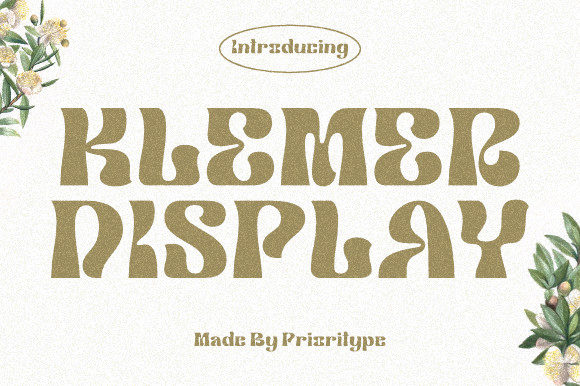
In the landscape of digital design and content creation, typography often serves as the silent architect of user experience. It dictates tone, establishes hierarchy, and guides the eye through complex information structures. Among the vast array of typefaces available to professionals, Klemer stands out as a wavy, whimsical, and thick lettered display font that offers a unique solution for specific creative challenges. While it is not a utility font intended for body copy or technical documentation, its potential to elevate any creation makes it an indispensable asset to a comprehensive fonts' library.
For entrepreneurs, marketers, educators, and freelancers who manage multiple projects simultaneously, the decision to adopt a new typeface should be driven by practical application rather than fleeting trends. This article explores how to integrate Klemer into your existing workflows, ensuring that its distinctive character enhances your output without compromising clarity or professionalism.
Understanding the Role of Display Fonts in Professional Processes
To effectively utilize Klemer, one must first understand its functional niche within a broader design system. Unlike standard sans-serif or serif fonts designed for readability over long passages, display fonts are engineered for impact. They are meant to be seen, felt, and remembered. The wavy and whimsical nature of Klemer introduces a sense of movement and playfulness that static geometric fonts simply cannot replicate.
When planning a project, whether it is a brand identity overhaul, a social media campaign, or an educational resource, the selection of typography occurs at the very beginning. This is where preparation meets execution. By identifying moments where a standard font might feel too rigid or corporate, you create an opportunity for Klemer to shine. Its thick lettering ensures visibility even at smaller sizes or from a distance, making it particularly useful for headers, signage, and promotional materials.
The key to successful integration lies in restraint. Using Klemer excessively can dilute its impact, turning a whimsical accent into visual noise. Instead, view it as a strategic tool used to break patterns and draw attention to critical elements within your workflow.
Strategic Placement Before Production Begins
Before a single pixel is placed on a canvas, the conceptual phase of a project requires careful consideration of tone. If you are a small business owner launching a new product line or a blogger preparing a series of posts, the choice of font sets the emotional baseline. Klemer is ideal for scenarios requiring a human touch, creativity, or a departure from traditional corporate seriousness.
- Brand Identity: Use Klemer for logo markups or taglines where memorability is paramount.
- Campaign Launches: Deploy it in email subject lines or landing page hero sections to signal excitement.
- Educational Materials: Apply it to chapter headings or quiz titles to engage younger audiences or lighten the mood of serious subjects.
By deciding on the use of this font during the planning stage, you ensure consistency across all deliverables. This proactive approach prevents the common pitfall of retrofitting fonts after the design is complete, which often leads to mismatched styles and a disjointed final product.
Integration During the Creative Execution Phase
Once the plan is set, the execution phase demands efficiency and precision. In tools like Adobe Creative Cloud, Canva, or Figma, integrating a specialized font like Klemer requires specific steps to maintain quality control. Because Klemer is a display font, it interacts differently with kerning, leading, and layout grids compared to body text.
During the drafting process, designers often struggle with balancing whimsy and legibility. The thick strokes of Klemer can sometimes crowd surrounding elements if spacing is not adjusted correctly. To mitigate this, allocate extra time for fine-tuning the negative space around headlines. This adjustment is crucial for maintaining a professional appearance while retaining the font's playful character.
Furthermore, consider how Klemer interacts with other assets in your toolkit. When paired with clean, minimalist imagery or stark photography, the font adds a layer of personality that grounds the image in a specific aesthetic. Conversely, pairing it with overly busy backgrounds can obscure the text. A practical workflow involves creating a "style guide" snippet early in the project that demonstrates Klemer alongside your primary body font. This allows stakeholders to visualize the contrast before committing to the full design.
Efficiency in design is not just about speed; it is about making decisions that reduce revision cycles. Choosing the right font early prevents the need for major overhauls later.
Collaboration and Feedback Loops
In team environments, communication regarding typography is vital. When sharing files with colleagues, clients, or publishers, ensure that Klemer is properly embedded or linked. Relying on local installations can lead to compatibility issues where the font defaults to a generic substitute, ruining the intended effect. For web-based workflows, utilizing web font services ensures that the wavy, whimsical details render correctly across different devices and browsers.
When soliciting feedback, be specific about why you chose this font. Explain that the goal is to evoke a specific emotion or highlight a particular section. This context helps reviewers understand the intent behind the design choice, reducing subjective criticism and streamlining the approval process.
Post-Project Evaluation and Long-Term Asset Management
The lifecycle of a design does not end upon publication. Evaluating the performance of your typographic choices provides valuable data for future projects. Did the use of Klemer increase engagement rates? Did it improve brand recall? These questions help refine your strategy for subsequent tasks.
Organizing your fonts library is a critical component of long-term productivity. As a creator managing multiple client accounts or personal ventures, keeping track of licensed fonts is essential. Ensure that your usage of Klemer complies with licensing agreements, especially when distributing commercial assets. Proper organization allows you to quickly locate the font when starting a new initiative, saving valuable time in the preparation phase.
Moreover, consider the versatility of the font family. Does it come in multiple weights or styles? Even if Klemer is primarily a display font, checking for variations can expand your use cases. Some families include condensed versions or lighter weights that might work better for subheadings or captions, allowing for a more nuanced application within a single project.
Practical Tips for Seamless Implementation
To maximize the benefits of incorporating Klemer into your routine, focus on these actionable strategies:
- Test for Legibility: Always preview your designs on mobile devices. The thick lettering of display fonts can sometimes become illegible on small screens if the resolution is low or the background is cluttered.
- Maintain Contrast: Pair Klemer with neutral, high-contrast colors to ensure the text remains the focal point. Avoid placing it on patterned backgrounds unless the pattern is subtle.
- Limit Usage: Restrict the use of Klemer to headlines, pull quotes, or call-to-action buttons. Overuse diminishes its special status and can make your content appear chaotic.
- Document Your System: Create a simple style guide that defines when and how to use the font. This document serves as a reference for anyone working on the project, ensuring consistency regardless of who is executing the task.
Conclusion: Elevating Work Through Intentional Design
The journey from concept to completion is filled with countless micro-decisions, each contributing to the final quality of the output. Selecting the right typography is one of the most impactful of these decisions. Klemer, with its wavy, whimsical, and thick lettered form, offers a distinct advantage for creators looking to inject personality and energy into their work.
Whether you are a marketer crafting a viral campaign, an educator designing engaging lesson plans, or a freelancer building a portfolio, this font has the potential to elevate any creation. By approaching its integration thoughtfully—considering preparation, compatibility, and long-term usability—you can harness its power to communicate your message more effectively. Ultimately, the goal is not just to use a cool font, but to build a cohesive, efficient, and visually compelling workflow that supports your professional growth and creative vision.