Neon Robot: A Bold Typeface for High-Velocity Branding
In the crowded landscape of digital design, selecting a typeface that commands immediate attention while maintaining legibility is a constant challenge. Designers often struggle to find a balance between aggressive styling and professional utility. Neon Robot emerges as a distinct solution to this problem. It is not merely another display font; it is a bold, thick lettered, and futuristic display font engineered specifically for contexts where speed, power, and modernity are paramount. For professionals seeking to inject kinetic energy into their visual communications without sacrificing structural integrity, Neon Robot offers a compelling alternative to standard sans-serifs.
The Core Identity of Neon Robot
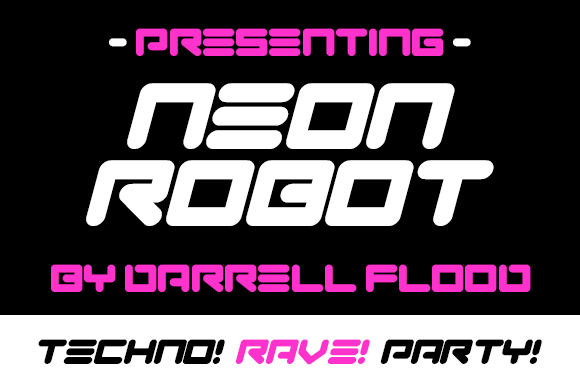
The defining characteristic of Neon Robot is its substantial weight. Unlike many "bold" fonts that rely on thin lines or intricate details to create impact, Neon Robot utilizes thick strokes and geometric precision to establish a dominant presence. The letterforms are constructed with a futuristic aesthetic, evoking imagery associated with advanced technology, high-speed racing, and urban nightlife. This specific combination of thickness and futuristic geometry makes it an ideal candidate for sports-related designs, racing graphics, or any project requiring a sense of rapid motion.
When you examine the anatomy of the characters, you notice a deliberate lack of serifs and a focus on horizontal momentum. The terminals are often squared off or slightly tapered to suggest velocity. This is not a font designed for long-form body copy or delicate editorial layouts. Its purpose is singular and clear: to act as a headline, a logo mark, or a primary visual anchor. By using Neon Robot confidently in your favorite creations, designers can instantly shift the tone of a project from passive to active. The outcome generated is often one of high contrast and immediate visual engagement.
Performance in Real-World Applications
To understand the true value of Neon Robot, one must look beyond the static preview and consider how it performs in dynamic environments. In the realm of sports marketing, typography plays a crucial role in conveying the intensity of the game. Whether applied to a jersey number, a stadium banner, or a social media graphic for a live event, Neon Robot translates well across various mediums. Its thick lettering ensures that the text remains readable even when viewed from a distance or at small sizes on mobile devices, provided it is used correctly.
Racing and automotive industries frequently demand fonts that mimic the blur of speed. Neon Robot achieves this through its sharp angles and heavy presence. When paired with sleek gradients or metallic textures, the font enhances the perception of performance. However, effectiveness is contingent upon context. If placed against a busy background or combined with other decorative elements, the font's strength can become a liability. It requires a clean canvas to truly shine. The best results occur when the designer allows ample negative space around the text, letting the bold forms breathe and dominate the composition.
For entrepreneurs and small business owners in the tech or gaming sectors, Neon Robot serves as a strong branding tool. A logo incorporating these characteristics signals innovation and forward-thinking. It suggests a company that is fast-paced and reliable. Yet, there is a fine line between being futuristic and appearing dated. The key lies in execution. Using Neon Robot in isolation or with minimal supporting elements tends to yield a more timeless result than over-styling it with excessive effects.
Strengths and Practical Value
The practical value of Neon Robot extends beyond its aesthetic appeal. From a usability standpoint, the font is versatile within its intended niche. It supports a range of weights and styles that allow for hierarchy within headlines. While it is primarily a display type, the consistency of its character set ensures that mixed-case text retains the same level of impact as all-caps settings. This consistency is vital for maintaining brand identity across different platforms, from web headers to printed merchandise.
- Visual Impact: The thick, blocky nature of the letters grabs attention faster than lighter typefaces.
- Futuristic Appeal: The geometric construction aligns perfectly with themes of robotics, AI, and digital transformation.
- Sporting Utility: The dynamic feel makes it suitable for athletic branding, team logos, and event promotions.
- Legibility at Scale: Despite its stylized appearance, the open counters and bold strokes ensure readability in large formats.
Furthermore, the font's reliability in vector-based workflows makes it a safe choice for professionals who need to scale assets without losing quality. Whether creating a massive billboard or a tiny app icon, Neon Robot maintains its structural integrity. This flexibility reduces the need for multiple font variations, streamlining the workflow for creators and publishers who manage multiple projects simultaneously.
Audience Fit and Strategic Application
Who benefits most from integrating Neon Robot into their design toolkit? The primary audience includes marketers, freelancers, and educators who need to communicate complex ideas quickly. For instance, an educator creating a presentation on future technologies could use Neon Robot for slide titles to reinforce the subject matter visually. Similarly, bloggers covering the latest in electric vehicles or esports will find this font resonates deeply with their target demographic.
Small business owners launching products related to speed, performance, or technology should consider Neon Robot for their packaging and advertising materials. It helps differentiate their offerings from competitors who may be using generic, safe typefaces. However, serious hobbyists and creatives must exercise caution. The font is not a universal solution. It should not be used for corporate communications that require a tone of subtlety or tradition. In such cases, the aggressive nature of Neon Robot might alienate the audience rather than engage them.
When evaluating whether Neon Robot fits your needs, ask yourself if the project demands a sense of urgency or excitement. If the answer is yes, this font is likely a strong contender. If the goal is to convey calmness, elegance, or neutrality, other options would be more appropriate. Understanding the emotional resonance of the typeface is just as important as understanding its technical specifications.
Nuances and Limitations
No creative asset is without its limitations, and Neon Robot is no exception. One potential drawback is its tendency to dominate a layout. Because of its heavy weight, it can easily overpower accompanying images or secondary text. Designers must be mindful of hierarchy, ensuring that the font does not clutter the visual field. Additionally, while the futuristic style is generally timeless, extremely trendy interpretations of "robotic" design can sometimes date a project quickly if not balanced with classic elements.
Another consideration is accessibility. While the font is legible, the extreme stylization of certain characters can occasionally cause confusion for readers with visual impairments or those processing information quickly. It is essential to test the font in real-world scenarios to ensure it meets accessibility standards, particularly for public-facing websites or educational materials. Pairing Neon Robot with a highly legible sans-serif for body text is a recommended strategy to mitigate this issue.
Final Thoughts on Integration
In conclusion, Neon Robot stands out as a specialized tool for designers who need to convey power, speed, and modernity. Its bold, thick lettering and futuristic aesthetic make it uniquely suited for sports, racing, and high-tech applications. When used with confidence and strategic intent, it transforms ordinary designs into memorable experiences. The outcome generated by thoughtful application is a visual language that speaks directly to an audience seeking innovation and dynamism.
For professionals looking to expand their design repertoire, adding Neon Robot to the collection is a prudent move. It offers a unique voice that few other fonts can match. However, success depends on respecting the font's strengths and acknowledging its limitations. By applying it to the right projects—those that benefit from a high-energy, futuristic touch—designers can leverage its full potential. Let yourself be amazed by the outcome generated when this typeface is paired with the right concept, color palette, and layout strategy. It is a testament to the power of typography to shape perception and drive engagement in a competitive digital world.