Straightler: An Evaluation of a Distinctive Display Typeface
In the landscape of digital typography, selecting the right typeface is often a critical decision that defines the visual identity of a project. Designers frequently seek fonts that do more than simply convey text; they look for characters that establish tone, command attention, and provide a unique aesthetic signature. Straightler has emerged as a notable option in this category, specifically designed to serve projects requiring a bold, assertive presence. This evaluation explores the characteristics of Straightler, its practical applications, and the strategic considerations involved in integrating it into design workflows.
Defining the Aesthetic: What is Straightler?
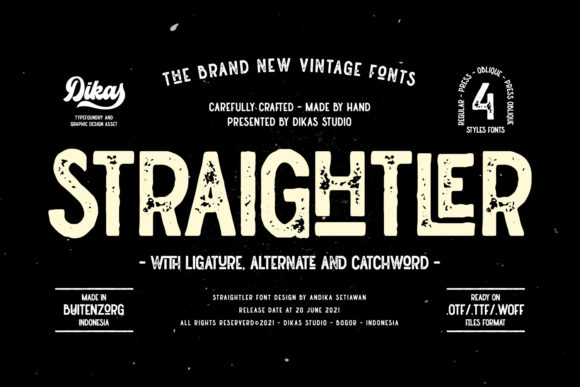
Straightler is best categorized as a display font, a classification reserved for typefaces intended for use at large sizes rather than extended body copy. Its defining characteristic lies in its rough, assertive styling. Unlike traditional serif or sans-serif fonts that prioritize neutrality and legibility above all else, Straightler embraces a distinct personality. The letterforms are constructed with simple shapes, yet they possess an imposing quality that prevents them from feeling generic.
The "rough" aspect of its style suggests a texture or irregularity in the strokes, giving the impression of something hand-carved, stamped, or weathered. This approach creates a visual weight that feels substantial and grounded. By utilizing simple geometric foundations but applying a rugged treatment, Straightler achieves a balance between modern minimalism and raw, industrial grit. This combination allows it to stand out in crowded visual environments where standard fonts might blend into the background.
Strategic Applications: Where Does It Fit?
Understanding when to use Straightler requires an analysis of the context in which it will appear. Because it is a display font, its primary utility lies in headlines, titles, logos, and short bursts of text. It is rarely suitable for long-form reading due to its stylistic intensity. However, within its intended scope, it offers several compelling advantages.
- Brand Identity: For brands aiming to project strength, durability, or rebellion, Straightler provides an immediate visual cue. Its imposing nature makes it ideal for industries such as construction, automotive, heavy machinery, or streetwear fashion.
- Event Marketing: Posters, flyers, and event banners benefit from the high contrast and readability of Straightler. The font's ability to grab attention quickly makes it a strong candidate for promotional materials where the goal is to stop the viewer in their tracks.
- Editorial Design: In magazine layouts or digital articles, using Straightler for pull quotes or section headers can create a dynamic rhythm. It breaks the monotony of standard typography without sacrificing the structural integrity of the page.
The versatility of Straightler stems from its ability to match a wide range of creations. Whether the project requires a vintage feel or a contemporary edge, the simple shapes of the letters allow the font to adapt to various color palettes and layout structures. It serves as a distinct touch that elevates a design from functional to memorable.
Evaluating Tradeoffs and Limitations
While Straightler offers significant visual impact, designers must approach its usage with caution. No single typeface is a universal solution, and understanding the limitations is just as important as recognizing the benefits.
The most significant tradeoff involves legibility in smaller sizes. The rough styling and imposing nature of the letters can cause character recognition issues when the font is scaled down. Consequently, it is not recommended for navigation menus, footnotes, or dense paragraphs of text. Attempting to force Straightler into roles it was not designed for can result in a user experience that feels cluttered and difficult to process.
Additionally, the assertive tone of Straightler may clash with content that requires subtlety. If the message being conveyed is delicate, emotional, or corporate in a conservative sense, the roughness of the font could undermine the intended sentiment. A financial report or a healthcare brochure might suffer if paired with a typeface that inherently communicates aggression or informality.
Decision-Making Framework for Selection
To determine whether Straightler aligns with specific project goals, designers should consider a structured decision-making process. The following factors help evaluate the fit objectively.
- Define the Emotional Goal: Ask what emotion the design needs to evoke. If the answer is power, resilience, or edginess, Straightler is a strong contender. If the goal is calmness, elegance, or trustworthiness through tradition, other options may be superior.
- Analyze the Hierarchy: Ensure there is a clear distinction between the headline and the body text. Straightler should act as the anchor. Pairing it with a highly legible, neutral sans-serif or serif font for body copy often yields the best results, creating a harmonious contrast between style and function.
- Consider the Medium: Evaluate where the design will live. On a large outdoor billboard, Straightler's details will shine. On a mobile interface with limited screen real estate, the complexity of the "rough" elements might become pixelated or confusing.
Alternatives and Comparative Context
While Straightler is a robust choice for specific scenarios, it is part of a broader ecosystem of display fonts. Designers evaluating Straightler should also consider alternatives based on the specific nuance required.
If the project requires a similar level of boldness but with a cleaner, less textured appearance, a standard blocky sans-serif might be more appropriate. These fonts offer authority without the "rough" aesthetic, making them safer for corporate or tech-focused branding. Conversely, if the goal is to achieve a vintage or distressed look without the strict simplicity of Straightler, grunge-style fonts with more irregular edges could provide a different flavor of ruggedness.
For contexts where the text needs to be readable across a wider range of sizes while maintaining some personality, a humanist sans-serif or a slab serif might serve as a better bridge. These fonts offer character without the overwhelming dominance of a dedicated display typeface like Straightler.
Conclusion: Aligning Font with Function
Straightler represents a powerful tool in the typographic toolkit, defined by its cool, rough style and assertive presence. Its simple shaped letters and imposing structure make it an excellent choice for designs that require a distinct touch and a strong visual voice. However, its effectiveness is contingent upon proper application. It excels in headlines, branding, and promotional materials where capturing attention is paramount.
By carefully weighing the benefits against the limitations, designers can make informed decisions about incorporating Straightler into their work. When used strategically, it transforms a standard layout into a statement piece. Ultimately, the success of any font selection lies in its ability to support the message rather than overshadow it. For projects demanding a rugged, confident identity, Straightler stands out as a viable and impactful option.