Wakile Display Font Evaluation
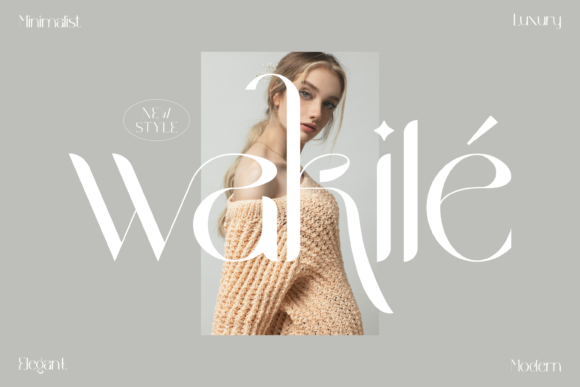
When selecting a typeface for a design project, the choice often dictates the visual hierarchy and emotional resonance of the final output. Wakile is a delicate, beautiful, and uniquely designed display font that has gained attention among designers seeking distinctive typographic character. Unlike standard system fonts, Wakile is engineered to offer a specific aesthetic profile that stands out in headlines, branding, and editorial layouts. This evaluation explores the technical specifications, practical applications, and strategic considerations necessary for determining if this typeface aligns with your current project requirements.
Understanding the Technical Architecture
To utilize Wakile effectively, it is essential to understand its underlying encoding structure. The font is PUA encoded, which stands for Private Use Area. In the context of OpenType fonts, the PUA is a reserved section of the Unicode standard where developers can assign custom glyphs without conflicting with standard characters. This architectural decision allows the designer of Wakile to pack an extensive library of alternate characters, ornaments, and stylistic sets into the font file itself.
The primary advantage of this encoding method is accessibility. Because the glyphs are mapped to specific code points within the private use area, users can access all the amazing glyphs and ligatures with ease through supported text editors and design software. There is no need for complex third-party plugins or manual glyph substitution tools in many modern workflows. Once installed, the font becomes a robust toolset rather than a static set of letters. This feature ensures that the unique details intended by the creator are available immediately upon selection, streamlining the creative process.
Reasons to Consider Wakile for Your Project
Designers often seek fonts that offer more than basic legibility; they look for personality. Wakile provides a delicate and refined appearance that can elevate a composition from functional to artistic. The following factors highlight why this typeface might be selected over other display options:
- Visual Distinctiveness: The unique design characteristics of Wakile prevent it from blending into generic templates. It offers a specific flavor that can define a brand's voice or a publication's tone.
- Ligature Integration: The inclusion of advanced ligatures allows for smoother transitions between letters. These connected forms reduce visual gaps and create a more cohesive word shape, which is particularly effective in large display sizes.
- Ornamental Flexibility: The PUA encoding grants access to decorative elements that can be used as dividers, bullet points, or standalone graphic elements, reducing the need to source separate icon packs.
- Confident Implementation: The font is designed to be added confidently to favorite creations. Its stability across different platforms means that the outcome generated will remain consistent whether viewed on a screen or printed on high-quality paper.
Benefits and Practical Tradeoffs
While Wakile offers significant aesthetic benefits, every typeface comes with tradeoffs that must be weighed during the selection process. Understanding these nuances is critical for maintaining professional standards.
The most prominent benefit is the richness of the glyph set. A single font file containing hundreds of alternates saves time during the layout phase. Designers can experiment with different letterforms quickly to find the perfect balance of style and readability. However, this richness introduces a consideration regarding compatibility. While modern software handles PUA fonts well, older systems or web browsers may not render the private use characters correctly if the font files are not properly embedded or if the user lacks the font installed locally.
Another tradeoff involves legibility at small sizes. As a display font, Wakile is optimized for headlines, posters, and large text blocks. Its delicate strokes and intricate details may become indistinct when scaled down for body copy or mobile interfaces. Using it for long-form text would likely result in reader fatigue and reduced comprehension. Therefore, the font should be treated as a specialized tool rather than a general-purpose solution.
Situations Where Wakile Is a Strong Fit
There are specific scenarios where Wakile excels due to its unique properties. Identifying these situations helps ensure the font serves its intended purpose effectively.
- Editorial Headlines: For magazine covers, book titles, or article headers, the delicate nature of Wakile adds an air of sophistication. It draws the eye without overwhelming the accompanying imagery.
- Branding and Logos: When a brand requires a custom typographic mark, the availability of unique ligatures and alternates allows for logo construction that feels bespoke. The font can be manipulated to create a symbol that is difficult to replicate with standard fonts.
- Invitation and Event Design: Weddings, galas, and high-end events often require typography that conveys elegance. Wakile's ornamental capabilities make it ideal for creating invitations that feel personal and curated.
- Short-Form Digital Content: Social media graphics, landing page hero sections, and email subject lines benefit from the font's ability to stand out in a crowded digital environment.
When Alternatives May Be Worth Considering
Despite its strengths, Wakile is not a universal solution. There are contexts where other typefaces would be more appropriate or where the limitations of Wakile could hinder the project's success.
If the project requires high legibility across diverse devices and languages, a widely supported sans-serif or serif font with extensive language coverage is preferable. Wakile's reliance on PUA encoding means it may lack support for non-Latin scripts or less common symbols found in international markets. Additionally, if the design needs to function seamlessly in environments with strict licensing restrictions or limited font embedding capabilities, a standard font with broad browser support might be safer.
Furthermore, if the design goal is minimalism or neutrality, the unique character of Wakile might introduce too much visual noise. In cases where the content is the primary focus, such as news websites or data-heavy dashboards, a more subdued typeface ensures that the information remains accessible and unobstructed.
Practical Decision-Making Insights
Deciding to use Wakile requires a clear assessment of the project's goals against the font's capabilities. Before committing, designers should test the font in actual mockups rather than relying solely on preview images. Check how the ligatures interact with the specific words being used; sometimes a ligature looks beautiful in isolation but creates awkward spacing in a full sentence.
It is also advisable to verify the technical implementation plan. Ensure that the development team or print vendor understands how to handle PUA encoded fonts. If the workflow involves converting text to outlines (vectorizing) before export, the risk of encoding issues is mitigated, making Wakile a very safe choice for final production.
Ultimately, the decision rests on whether the desired outcome justifies the specific technical requirements. If the project demands a delicate, beautiful, and uniquely designed display font that allows for easy access to a wide range of glyphs, Wakile is a strong candidate. Let yourself be amazed by the outcome generated when the font is applied correctly, but always prioritize the functional needs of the audience above purely aesthetic preferences.
In summary, Wakile represents a specialized resource for designers looking to add a layer of refinement to their work. By understanding its encoding, recognizing its optimal use cases, and acknowledging its limitations, professionals can integrate this font into their workflow with confidence. Whether used for a striking headline or a detailed invitation, Wakile offers a level of detail that can transform a standard design into something memorable.