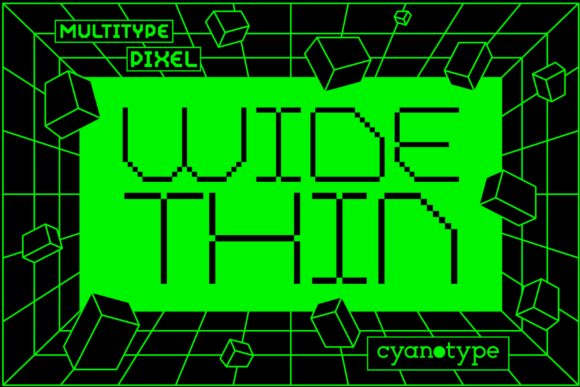
Revitalizing Digital Narratives with MultiType Pixel Display Bold
In an era where digital interfaces are saturated with clean, minimalist sans-serifs and uniform geometric typefaces, the quest for distinct visual identity has become a primary challenge for forward-thinking brands. The modern web demands more than just readability; it requires an emotional hook that stops the scroll and engages the user immediately. This is where MultiType Pixel Display Bold emerges not merely as a font choice, but as a strategic asset in the designer's toolkit. It represents a convergence of retro nostalgia and futuristic distortion, offering a unique solution for professionals seeking to break the monotony of standard typography.
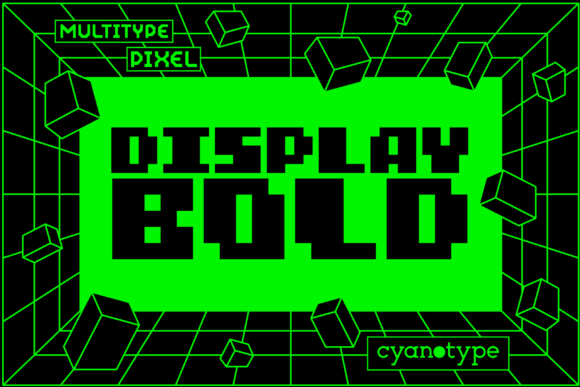
The landscape of digital design is shifting. We are moving away from the "flat" design era that dominated the last decade toward a style that embraces texture, depth, and character. Users are increasingly fatigued by homogenized corporate aesthetics. They crave experiences that feel handcrafted, edgy, and authentic. MultiType Pixel Display Bold answers this call by injecting a distorted and trendy touch into designs that need to stand out. Its unusual shape and pixelated structure create an immediate sense of intrigue, bridging the gap between the low-resolution charm of early computing and high-end contemporary graphic design.
The Evolution of Pixel Aesthetics in Modern Markets
To understand the relevance of MultiType Pixel Display Bold, one must look at the broader trajectory of technology and consumer culture. For years, pixel art was confined to indie games and niche communities. However, the rise of Web3, gaming culture, and the "brutalist" web movement has brought these aesthetics into the mainstream. Today, consumers associate pixelated visuals with authenticity, transparency, and a rejection of overly polished corporate facades.
Entrepreneurs and marketers are recognizing that this aesthetic resonates deeply with younger demographics who value individuality over conformity. By incorporating MultiType Pixel Display Bold into branding materials, businesses can signal that they are innovative, culturally aware, and unafraid to experiment. This font is not just about looking old; it is about reinterpreting the past through a modern lens. It fits perfectly into industries ranging from fintech startups wanting to appear disruptive to lifestyle brands aiming for a streetwear edge.
The market is currently seeing a surge in demand for typefaces that offer personality without sacrificing legibility. While many fonts attempt to mimic the blocky nature of 8-bit graphics, few succeed in maintaining a professional tone while delivering that specific "cool factor." MultiType Pixel Display Bold achieves this balance by utilizing a bold weight that commands attention even at smaller sizes, ensuring that the message remains clear despite the complex geometry of the characters.
Technical Precision Meets Creative Freedom
Beyond the visual appeal, the technical architecture of MultiType Pixel Display Bold addresses a common pain point for designers and developers: accessibility and consistency. Traditional pixel fonts often suffer from limited character sets or require complex workarounds to achieve stylistic variations. This limitation can stifle creativity and slow down workflows, particularly for freelancers and agencies working under tight deadlines.
This is where the PUA (Private Use Area) encoding becomes a game-changer. By leveraging PUA encoding, MultiType Pixel Display Bold ensures that all glyphs and swashes are accessible with ease. This means that designers can access a vast library of stylistic alternates without needing to install multiple files or rely on external plugins. The result is a streamlined workflow where the focus remains on creative direction rather than technical troubleshooting.
For professionals managing large-scale projects, such as multi-page websites or comprehensive brand guidelines, this level of control is invaluable. It allows for the creation of dynamic, varied typographic hierarchies within a single document. A headline can be rendered with a standard glyph, while a subheading might utilize a swash variant, creating a rhythm and flow that keeps the reader engaged. The ability to toggle between different pixel styles instantly empowers creators to iterate faster and produce higher-quality outputs.
Practical Applications in Professional Workflows
The versatility of MultiType Pixel Display Bold makes it applicable across a wide spectrum of professional scenarios. Consider the case of a marketing team launching a new product aimed at gamers or tech enthusiasts. Traditional serif or sans-serif fonts might blend into the background noise of the internet. In contrast, using MultiType Pixel Display Bold for key headlines creates an immediate association with the target audience's interests.
- Landing Pages: High-conversion landing pages benefit from the urgency and impact of bold, distorted text. The pixelated nature draws the eye, making it ideal for Call-to-Action buttons and hero sections.
- Social Media Graphics: In a feed dominated by smooth gradients and soft shadows, a sharp, pixelated font stands out. It cuts through the visual clutter, increasing shareability and engagement rates.
- Event Branding: For tech conferences, hackathons, or retro-themed parties, this font provides an instant thematic anchor that aligns with the event's atmosphere.
- Merchandise Design: From t-shirts to stickers, the bold strokes of MultiType Pixel Display Bold translate exceptionally well to print media, offering a tactile feel that mimics screen printing techniques.
Furthermore, the font's ability to handle distortion adds a layer of dynamism that static images cannot match. When paired with motion graphics, the jagged edges of the pixels can create a jittering effect that simulates signal interference or glitch art. This trend, known as "glitch typography," is gaining traction in digital advertising as a way to convey speed, data processing, and the chaotic nature of the modern information age.
Meeting Changing Consumer Expectations
As we navigate the future of digital consumption, expectations regarding content delivery are evolving. Users no longer want to passively consume information; they want to interact with it. They seek environments that feel alive and responsive. MultiType Pixel Display Bold contributes to this interactivity by breaking the rigid grid structures that have long defined web layouts.
The font encourages a more experimental approach to layout design. Because the characters are uniquely shaped and somewhat unpredictable, designers are forced to think outside the box when arranging text. This leads to more organic, less formulaic compositions that feel human-made rather than algorithmically generated. In a world increasingly populated by AI-generated content, having a tool that emphasizes human curation and artistic intent is more valuable than ever.
Moreover, the inclusion of swashes and alternate glyphs supports the growing trend of variable typography. Brands are moving towards systems where type can adapt to context, mood, and medium. MultiType Pixel Display Bold facilitates this adaptability, allowing a single font family to serve multiple purposes within a brand ecosystem. Whether it needs to be aggressive and loud or subtle and mysterious, the right glyph can shift the entire tone of a message.
Strategic Integration for Long-Term Success
Implementing MultiType Pixel Display Bold is not just about selecting a cool-looking font; it is about making a strategic decision that aligns with your brand's long-term goals. For entrepreneurs and freelancers, establishing a unique visual language is crucial for differentiation. In crowded markets, the difference between success and obscurity often lies in the details—details like the texture of your typography.
By adopting this font, you are signaling to your audience that you are attentive to trends and committed to quality. You are showing that you understand the cultural zeitgeist and are willing to take risks to capture attention. This builds trust and credibility, especially among audiences that are skeptical of generic corporate messaging.
However, successful integration requires discipline. As with any distinctive typeface, moderation is key. Overusing MultiType Pixel Display Bold can lead to visual fatigue and reduce readability. The most effective applications use it as a display font for headings, pull quotes, and key identifiers, reserving body copy for highly legible, neutral typefaces. This contrast creates a balanced composition where the boldness of the display font enhances the clarity of the supporting text.
Ultimately, the power of MultiType Pixel Display Bold lies in its ability to tell a story. It tells a story of innovation, of looking back to move forward, and of embracing the imperfections that make digital experiences feel real. For professionals ready to elevate their craft and connect with their audience on a deeper level, this font offers a compelling path forward.
As the digital landscape continues to evolve, the tools we choose will define the boundaries of our creativity. MultiType Pixel Display Bold stands ready to help you push those boundaries, offering a distorted, trendy, and technically robust solution for the next generation of digital design. Whether you are building a website, crafting a campaign, or designing a brand identity, this font provides the unique shape and character needed to leave a lasting impression.
In conclusion, the adoption of MultiType Pixel Display Bold is a reflection of a broader shift in how we communicate visually. It represents a move towards more expressive, accessible, and engaging design practices. By understanding its capabilities and integrating it thoughtfully into your workflow, you can unlock new levels of creativity and ensure your work remains relevant in an ever-changing market.